
If you’ve ever taken a loan from an app, you’ve probably experienced this:
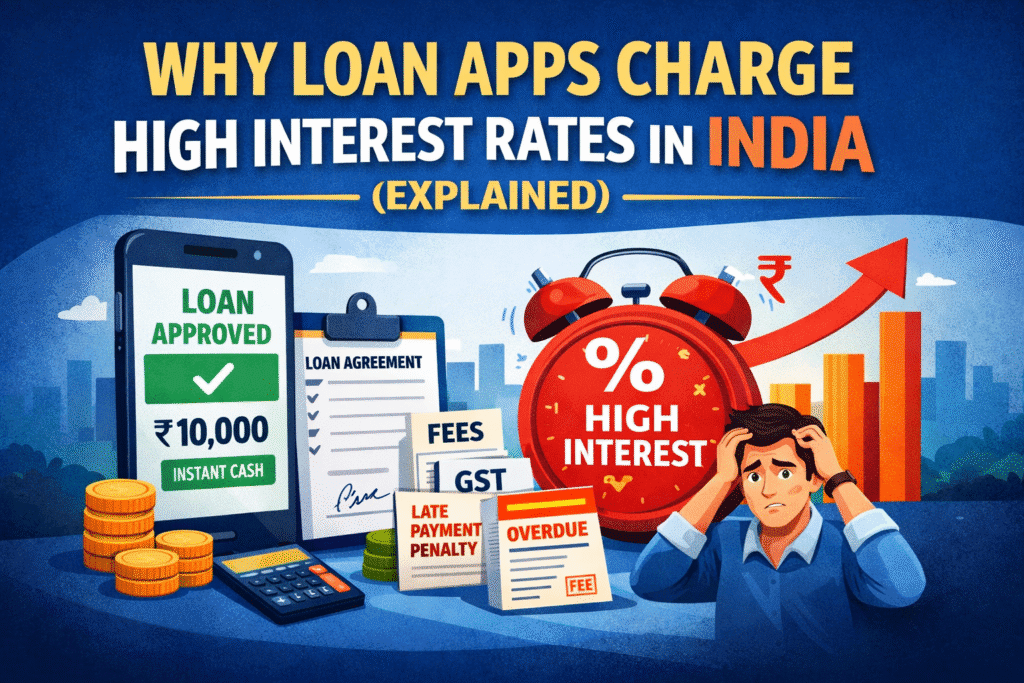
You borrow ₹10,000…
But end up repaying ₹13,000 or even ₹15,000.
At first, it feels confusing.
“Why is the interest so high?”
“Are loan apps overcharging?”
“Is this even legal?”
The reality is — loan apps are not simply “expensive.”
They operate on a completely different model compared to traditional banks.
Once you understand how they work, the pricing starts to make more sense — even if it still feels costly.
The Biggest Misconception: Loan Apps Decide the Interest
Most people assume:
👉 The app decides the interest rate.
But in most cases, that’s not true.
Loan apps are usually just:
- Platforms
- User interfaces
- Customer acquisition channels
The actual loan is provided by NBFCs (Non-Banking Financial Companies), and if you’re not familiar with how this works, it’s worth understanding how NBFCs operate behind loan apps and why they are the real lenders.
This matters because:
👉 The app shows the loan
👉 But the NBFC carries the risk and determines the pricing
The Real Trade-Off: Convenience vs Cost
One thing I’ve personally noticed while using loan apps is how incredibly easy the process feels.
You download an app, the interface looks clean, the offers seem attractive, and within minutes, you’re approved. In many cases, the money is credited to your account almost instantly.
Now compare that with a bank.
You usually have to:
- Visit a branch
- Submit documents
- Wait for processing
- Follow up with an agent
- Deal with working day delays
This process can take 2–4 days, sometimes longer.
So if you have the patience, banks are usually cheaper.
But for small loans, most people don’t want to go through that entire process.
That’s where loan apps become appealing.
Why People Still Choose Loan Apps
Let’s be honest.
Sometimes, the decision is not about interest rates.
It’s about access.
If:
- Your CIBIL score is low
- You’ve already taken multiple loans
- You’re a freelancer or gig worker
- A bank has rejected your application
Then your options become limited.
In those moments, the question becomes:
👉 “Where can I get money right now?”
And loan apps answer that instantly.
Why Small Loans Are More Expensive
There’s a simple reason behind high charges on small loans.
From a lender’s perspective:
- Processing ₹5,000 takes almost the same effort as ₹50,000
- Risk of default is higher
- Margins are smaller
So to make the business viable:
👉 Pricing is increased
This is not unique to India — it’s how unsecured lending works globally.
It’s Not Just Interest — It’s the Total Cost
Most borrowers focus only on interest.
But the real cost comes from multiple components.
📊 Cost Breakdown Example
| Component | What It Means |
|---|---|
| Interest | Cost of borrowing money |
| Processing Fee | Charged for loan approval |
| Platform Charges | App service fee |
| GST | Tax on fees |
| Late Charges | Penalty for delay |
👉 This is why ₹10,000 can become ₹14,000–₹15,000.
Many borrowers only realize this after taking the loan, which is why understanding hidden charges in loan apps beforehand can make a significant difference.
Short Tenure: Advantage or Pressure?
Loan apps usually offer:
- 7 days
- 14 days
- 30 days
- A few months
Unlike banks, which offer longer repayment periods.
At first, this feels restrictive.
Higher EMI.
Short repayment window.
But there’s another perspective.
Short tenure means:
- You finish the loan faster
- You don’t stay in debt for years
- You close the cycle quickly
Personally, I’ve felt that while the EMIs are higher, the shorter duration can actually be beneficial — because you’re not stuck with the loan long-term.
Risk Is the Biggest Pricing Factor
Loan apps often approve borrowers who banks reject.
This includes:
- Low credit score users
- No credit history
- Freelancers
- People with existing debt
For lenders, this is:
👉 Higher risk
And higher risk leads to:
👉 Higher pricing
Are High Interest Rates Legal?
Yes — if done transparently.
If the lender is:
✔ A registered NBFC
✔ Clearly disclosing charges
✔ Providing a proper agreement
Then the pricing is generally legal.
Problems arise when:
❌ Charges are hidden
❌ Terms are unclear
❌ Lender is not disclosed
If you ever feel that charges are unfair or not properly explained, knowing how the RBI grievance redressal process works can help you take the right steps.
How to Reduce Your Loan Cost (Practical Tips)
If you plan to use loan apps, here are some practical ways to reduce your burden:
1. Borrow Only What You Need
Avoid taking higher limits just because they’re available.
2. Always Check Total Repayment
Don’t focus only on the disbursed amount.
3. Read Fee Breakdown Carefully
Understand all charges before accepting.
4. Avoid Frequent Borrowing
Repeated small loans become expensive.
5. Verify the Lending Partner
Always check which NBFC is backing the loan.
Final Thoughts
Loan apps are not cheap.
They are:
👉 Fast
👉 Accessible
👉 Flexible
And that combination naturally comes at a higher cost.
The key is not to avoid them completely — but to:
👉 Understand what you’re paying for
Because once you understand the structure, you can make better financial decisions.