Can You Get a Loan With a 650 CIBIL Score in India? (2026 Guide)
 James D
Last Updated: July 2026 | By James D — Mumbai-based borrower, not a financial advisor
That's what my friend Amar told me over chai one afternoon. He wasn't broke — not in the careless sense. He'd had one genuinely bad stretch: lost several months of salary during a rough patch, took a personal loan to cover the gap, and assumed he'd repay it once things stabilised. They didn't stabilise fast enough. Notices piled up, calls got harder to ignore, and after two stressful years he ended up settling the loan for a fraction of what he owed — just to close the chapter and breathe again.
What he didn't understand at the time — what nobody had told him — was that the word "settled" on a loan account doesn't mean resolved. To a credit bureau, it means failed to repay in full. That tag dropped his CIBIL score to 650. And suddenly even a small, basic loan wasn't coming easy. The bank that had his salary account for three years rejected him without explanation. Two apps rejected him on the same day. He sat across from me over that chai and genuinely didn't know if there was a way forward.
There is. But it requires being honest about what a 650 score means, what your actual options are, and what it takes to rebuild. This is everything I told him — and what I'd tell anyone in the same position.
Yes — you can still get a loan with a 650 CIBIL score in India, but your options narrow significantly. Most banks will reject you outright. RBI-registered instant loan apps are your most realistic route — they weigh income consistency and repayment behaviour alongside the score. Expect higher interest rates (24–48% annual APR), smaller loan amounts (typically ₹3,000–₹25,000), and more scrutiny. The 650 score is not a verdict. It is a starting point that can be changed — deliberately and faster than most people think.
What a 650 CIBIL Score Actually Means
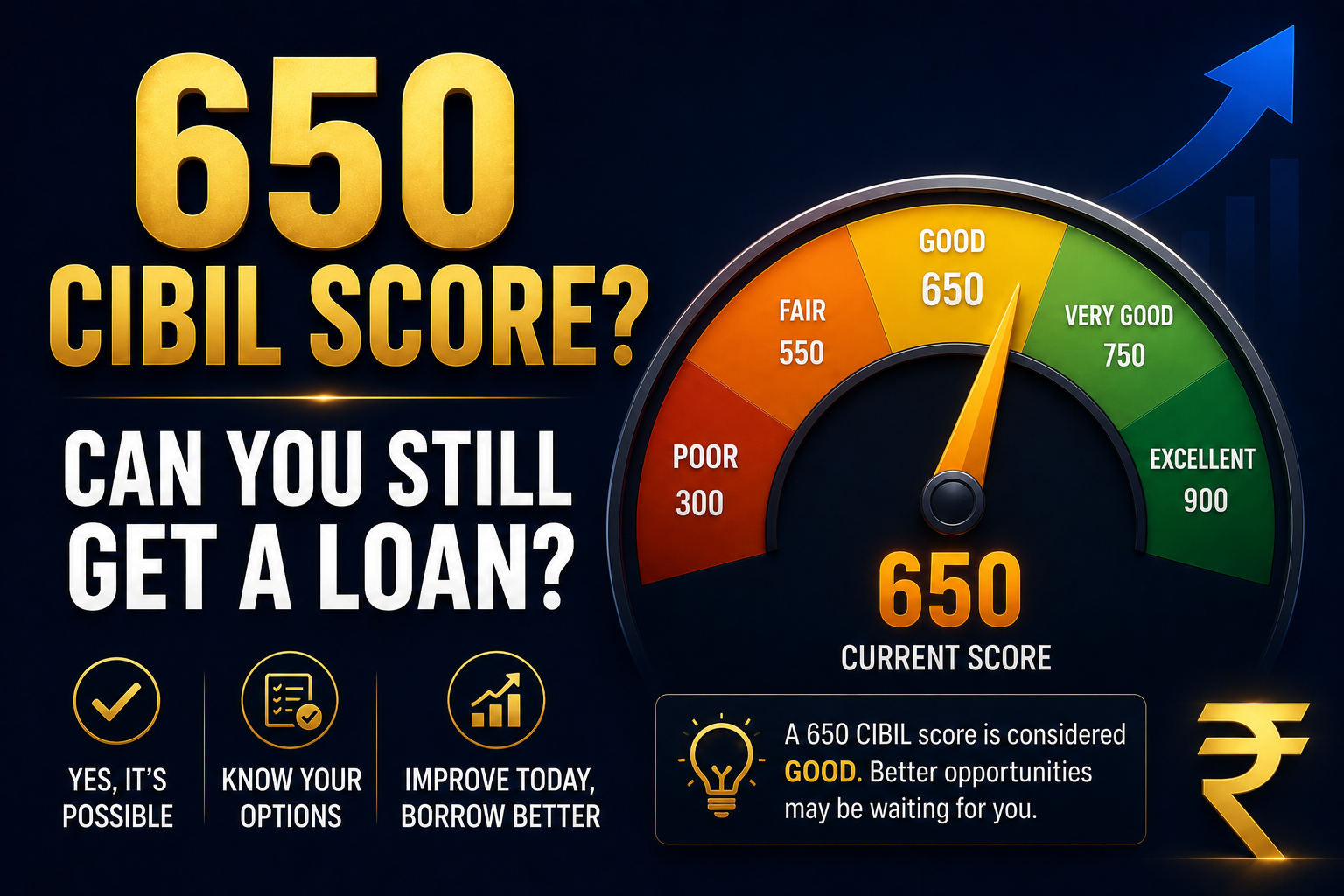
The CIBIL score runs from 300 to 900. Most lenders use 750 as their preferred threshold — anything above that and you're in the green zone where approvals are fast and interest rates are competitive. Below 700, lenders start applying more scrutiny. At 650, you're in what the industry calls the "fair" or watchlist range — not in active default territory, but carrying enough risk signals that approval is neither guaranteed nor comfortable.
| Score Range | Category | Loan Approval Odds |
|---|---|---|
| 750 – 900 | Excellent | High — best rates, fast approval |
| 700 – 749 | Good | Moderate — may need extra documents |
| 650 – 699 | Fair / Watchlist | Possible, but limited options |
| Below 650 | Poor | Low — especially with banks and large NBFCs |
One settled or defaulted account can be enough to land you at 650 even if everything else on your credit file is clean. That's what happened to Amar. His salary was steady, his other bills were paid on time, but that one settlement tag sat on his file like a stain that everyone could see. The system doesn't weigh context — it reads signals.

Can You Still Get a Loan With a 650 Score?
Yes — but with real tradeoffs that you need to understand before you apply. Here is an honest picture of what's available and what isn't:
- Instant loan apps are your most accessible option — many assess income and bank statement behaviour alongside CIBIL
- Smaller loan amounts are achievable — typically ₹3,000 to ₹25,000 depending on the app and your income
- A 650 score is not a permanent barrier — one or two clean repayments can visibly move it within months
- Most banks will reject outright — they use automated cutoffs and 650 rarely clears them
- Interest rates will be higher — expect 24–48% annual APR rather than the 12–18% available to 750+ borrowers
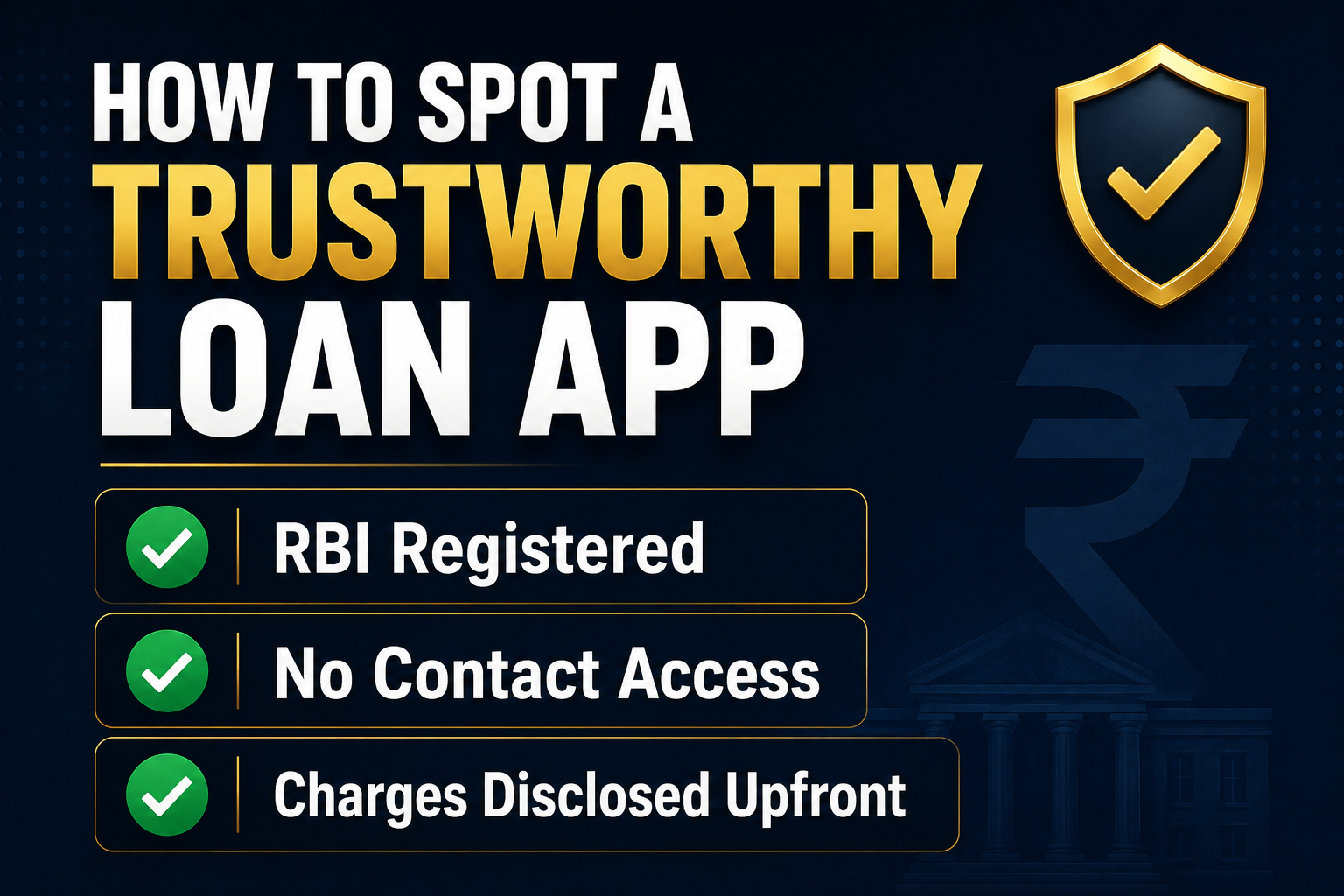
- A 650 score makes you a target for predatory apps — when options narrow, desperation goes up, and unregistered apps exploit this deliberately
Which Apps Will Still Consider You at 650
Not all apps use CIBIL as a hard cutoff. Several RBI-registered apps use alternative scoring — bank statement analysis, income consistency, existing credit lines — which gives borrowers in the 650 range a realistic shot at approval.
| App | Min CIBIL (approx.) | Why It Works at 650 |
|---|---|---|
| mPokket | Not required | No hard CIBIL cutoff — assesses income and bank behaviour |
| KreditBee | ~650 | Borderline-friendly — income and employment type weighed heavily |
| Navi | Flexible | Alternative data used — strong bank statement can compensate |
| NoBroker InstaCash | ~650 (alt. scoring) | Bank statement analysis rather than pure CIBIL |
| Nira | ~620 | Most lenient on score — longer approval time |
One important rule: Apply to one app at a time. Every application triggers a hard inquiry that drops your score by 5–10 points. Multiple applications in quick succession signal desperation to every lender who subsequently checks your file — and make approval less likely, not more. One app. One application. Wait for the result before trying elsewhere.
How to Rebuild From a 650 Score
This is what I told Amar that afternoon, and what I'd tell anyone in the same position: a 650 score is not a verdict. It is a starting point. The credit bureau records what happened — it doesn't predict what happens next. Every new positive data point you add starts shifting the picture. Here is how to do that deliberately.
If you have any active EMIs at risk of going late, that is priority one — above everything else in this list. Every additional missed payment digs the score deeper before you can start climbing out. If you're struggling to meet an existing EMI, call the lender's customer support before the due date and ask about a repayment extension. That conversation, uncomfortable as it is, is always better than a missed payment on record.
Taking a small loan — ₹3,000 to ₹5,000 — and repaying it fully and on time is one of the fastest ways to rebuild a damaged file. It creates a fresh, positive repayment entry against old negative ones. The goal is consistency, not size. I gained 12 points from a single clean ₹5,000 repayment when I was rebuilding after a rough stretch. Do it twice and you've created a pattern the bureau starts to weight positively. For the full strategy: How to Improve Your CIBIL Score Fast — My Real Experience.
Don't guess — track it. You are entitled to one free CIBIL report per year directly from cibil.com. Apps like Paytm, CRED, and Paisabazaar offer more frequent soft-inquiry checks that don't affect your score. Watching the number move keeps you honest about whether what you're doing is working — and is the fastest way to catch errors on your report before they compound. Errors on credit reports are more common than most people realise and can be disputed directly with the bureau.
This is the lesson that cost Amar two years and a CIBIL score. A settlement is recorded as a failure to repay in full — not a compromise, not a resolution, not a closed chapter. It sits on your file for years and triggers automatic flags at every lender who checks. If you genuinely cannot make an EMI, call the lender before you disappear. Ask for a restructuring, an extension, or a reduced payment plan. Most registered NBFCs have a formal hardship process. Use it — it protects your file in a way that settlement never will.

GetLoanCredit Verdict
A 650 CIBIL score puts you in a genuinely difficult but not hopeless position. Banks will say no. Most large NBFCs will say no. But RBI-registered instant loan apps — particularly mPokket, KreditBee, and Navi — offer a realistic path to borrowing at this score, with the added benefit that repaying cleanly is itself the fastest route to a better score.
The most dangerous thing about a 650 score is not the rejection — it's the vulnerability it creates. When legitimate doors close, predatory apps move in. Vet every app before applying. Apply to one at a time. Repay whatever you borrow on time, every time.
A 650 is a starting point, not a sentence. Amar is at 694 now, eight months later. He's still working toward the wedding.
Frequently Asked Questions